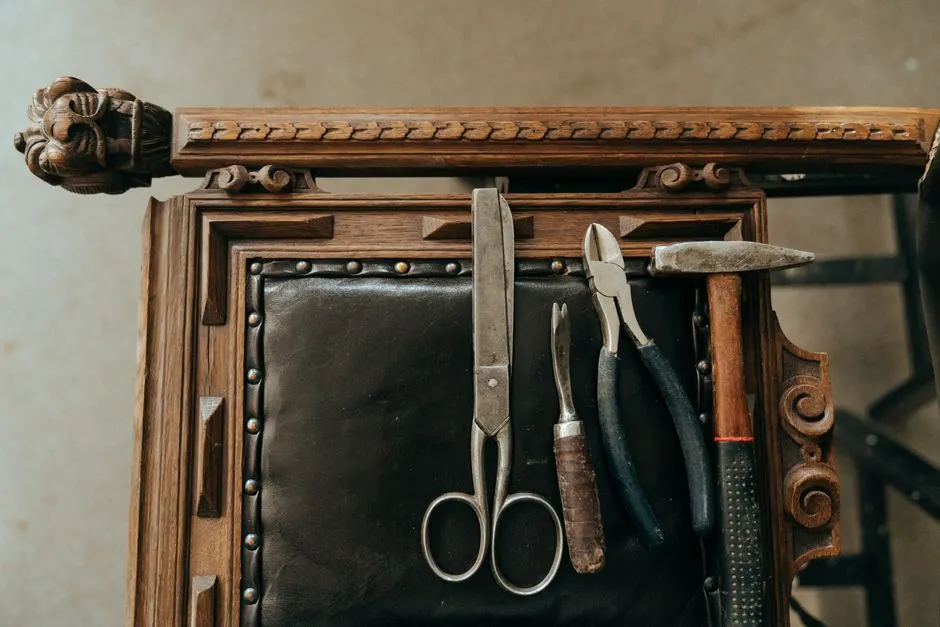
Most fire-damaged furniture can be restored instead of replaced - solid wood, metal, glass, and even smoke-soaked upholstery are routinely saved when the damage is caught before acids and soot etch into the surface. In Laguna Woods, where so many homes hold decades of furniture that cannot be bought again, restoration is usually the cheaper and wiser path. This guide walks through how we actually do it: what can be saved, what cannot, what it costs in 2026, and the mistakes that turn a restorable piece into a dumpster load.
Why most fire-damaged furniture can be saved
Fire rarely burns furniture - it coats it. In a typical Laguna Woods kitchen fire or electrical fire, the flames stay in one room while a layer of acidic soot and a cloud of smoke odor travel through the whole house. That distinction matters, because soot and odor are removable. Charred wood is not, but charring is usually limited to the piece closest to the ignition point.
Three things determine whether a piece is worth saving: the material, how long it sat before cleaning, and whether water from firefighting soaked into it. Solid oak, walnut, maple, teak, and most mid-century pieces clean up beautifully. Particleboard swells and delaminates once wet and is usually a loss. Upholstered sofas and chairs are almost always restorable if the foam did not burn and the fabric is not scorched through.
The clock is the real enemy. Soot is acidic. Within 72 hours it starts to etch lacquer, pit chrome, and stain fabric. Within a week, smoke odor has bonded to the foam inside cushions and to the raw wood under veneer. We see pieces every month that were perfectly restorable on day one and are a total loss by day ten because nobody started the process.
How do you restore fire-damaged furniture instead of replacing it in LAGUNA WOODS?
You restore fire-damaged furniture by removing soot and char mechanically, neutralizing the acidic residue, pulling smoke odor out of the material with ozone or hydroxyl treatment, then repairing and refinishing the surface. That is the whole process in one sentence. Everything below is the detail.
Restoring fire-damaged furniture is a sequence of cleaning and repair steps that removes combustion residue and returns the piece to a usable, odor-free condition - it is needed whenever a piece has been exposed to smoke, soot, or heat but has not been structurally destroyed. The order matters. If you polish a soot-covered table before you degrease it, you grind the acid into the grain and the finish is ruined.
Here is the sequence we run on almost every piece:
- Dry-soot removal with HEPA vacuum and soft brushes - never a wet rag first.
- Chemical sponge or degreaser wipe-down to lift the oily residue that holds the smell.
- Ozone or hydroxyl generator treatment in a sealed chamber for 24 to 72 hours.
- Structural repair - re-gluing joints, patching veneer, replacing burned trim.
- Refinishing, reupholstering, or polishing to match the original.
For homeowners across the region we handle the whole chain, and if the fire also hit the walls and flooring, our team covers Fire-Damaged Furniture Restoration LAGUNA WOODS CA alongside the structural work so nothing gets missed between trades.
What can be restored and what usually cannot
Solid wood furniture is the easiest category to save. Oak dining tables, walnut dressers, maple chairs, and teak patio pieces respond well to soot removal and refinishing. Even pieces with light charring on one edge can be sanded back and re-stained. Veneered pieces are trickier - if the veneer has lifted from water, it needs to be re-glued or replaced, but the underlying piece is still sound.
Upholstery is the second category. Fabric itself can almost always be cleaned. What kills a sofa is the foam. Polyurethane foam absorbs smoke odor like a sponge and holds it for years. If the foam is intact, we clean the fabric, replace the batting, and treat the frame. If the foam burned or melted, the cushions get replaced and the frame is saved. That is still far cheaper than a new sofa.
Metal and glass are the third category. Chrome and brass pit quickly from the acid in soot, so they need to be cleaned within 48 hours. Glass is usually fine unless it cracked from heat. Antiques and heirlooms fall into their own category - they are almost always worth restoring regardless of cost, because replacement is not possible.
What usually cannot be saved: particleboard that has swollen, mattresses that have absorbed smoke into the core, electronics with soot inside the housing, and anything with structural char through more than 20 percent of its load-bearing frame. We tell you honestly which category each piece falls into before we start.
Step-by-step: restoring wood, upholstery, and metal
Wood furniture fire damage repair
Start with a HEPA vacuum and a soft brush to lift loose soot. Do not wipe with a wet cloth - that drives the acid into the grain. Next, use a chemical sponge (a dry-cleaning soot sponge) to lift the oily film. Then a pH-neutral wood cleaner. Once the surface is clean, assess the finish. If the lacquer is intact, a light polish brings it back. If the finish is blistered or etched, we sand back to bare wood, repair any charred spots with wood filler matched to the species, and re-stain and re-lacquer.
Joints that were exposed to heat often loosen. We re-glue and clamp them. Veneer that has lifted gets re-glued with a hot iron and a veneer hammer. This is the work that saves a $3,000 dining set for a few hundred dollars.
Upholstery restoration after fire
Fabric gets vacuumed, then treated with a dry-cleaning solvent or a water-based upholstery cleaner depending on the fiber. Wool and silk need solvent. Cotton and synthetic blends can usually take water-based. Smoke odor in the fabric is treated with ozone after cleaning, not before - ozone cannot penetrate a soot layer.
Foam cushions are the deciding factor. If they smell, we replace them. New foam cut to size runs $40 to $120 per cushion depending on density and shape. The frame itself is almost always salvageable.
Metal, chrome, and hardware
Chrome and brass need to be cleaned within 48 hours of the fire or the acid pits the surface permanently. We use a non-abrasive metal polish and a soft cloth. Pitted chrome can sometimes be re-plated, but that is a specialty job and usually only worth it on antiques.
If the fire also damaged the room the furniture sits in, the cleanup overlaps with the rest of the house. Our Smoke Damage Restoration LAGUNA WOODS CA service covers walls, ceilings, and HVAC, and we run it in parallel with furniture restoration so the whole job finishes in one pass.
How much does fire-damaged furniture restoration cost in LAGUNA WOODS California?
Typical 2026 pricing in this area runs $150 to $450 for a single wood chair or side table, $400 to $1,200 for a dining table or dresser, $600 to $1,800 for a sofa or sectional, and $1,500 to $4,000 for a full room of furniture. Those are restoration costs, not replacement costs - a comparable new sofa runs $1,200 to $3,500 and an heirloom-quality dining set runs $3,000 to $8,000.
What drives the number up: heavy charring, water damage from firefighting, delicate fabrics like silk or velvet, and antique pieces that need hand-matched finishes. What keeps it down: catching the damage early, keeping the pieces dry, and not attempting DIY cleaning that damages the surface before we arrive.
Most homeowner insurance policies cover furniture restoration under the contents portion of the claim. We document each piece with photos and condition notes so the adjuster can process it without a second visit. If you are renting, the same documentation works for a renter's policy - our Tenant Fire Damage Cleanup LAGUNA WOODS CA service handles the paperwork side for tenants who do not own the building.
Common mistakes that turn a restorable piece into a loss
The single biggest mistake is wiping soot with a wet rag. Water plus soot equals acid, and acid etches the finish in minutes. We see this on almost every DIY attempt.
- Using a household vacuum. A standard vacuum blows fine soot into the air and into the motor, and it spreads the odor to every room.
- Spraying air freshener or vinegar. Both mask the smell temporarily and bond new chemicals to the fabric, making professional odor removal harder.
- Leaving furniture in the fire-damaged room. The smoke odor re-contaminates the piece every day it sits in the same air.
- Throwing out upholstered pieces before checking the frame. The frame is usually fine; only the foam and fabric need replacing.
- Waiting more than a week. Odor bonds to foam and raw wood, and the cost to restore roughly doubles.
One more: do not move furniture outside into the sun to "air out." UV light fades the finish and heat warps veneer. Shade and airflow, not direct sun.
When to call a professional
Call a professional when the piece is upholstered, when the smoke odor has been in the house more than 48 hours, when the furniture is antique or heirloom, or when the fire also damaged the structure of the room. Those four conditions cover most of what we see in Laguna Woods.
Our team handles the entire scope - soot removal, odor treatment, structural repair, refinishing, and reupholstery - under one roof. We work directly with your insurance adjuster, document every piece before and after, and tell you honestly when a piece is not worth saving. If your fire also affected the building itself, we coordinate with Structural Repair After Fire LAGUNA WOODS CA so the furniture and the room are finished at the same time.
We serve homeowners across the region, including the condos and co-ops around Fire Damage Restoration in Laguna Woods Village, where shared walls and HOA rules add a layer most restoration companies are not set up for. If you are not sure whether a piece is worth restoring, send us a photo. We will tell you straight.
Frequently Asked Questions
How do I restore fire-damaged furniture instead of replacing it in LAGUNA WOODS?
Vacuum dry soot with a HEPA filter, wipe with a chemical sponge, treat odor with ozone for 24 to 72 hours, then repair and refinish. Most solid wood and upholstered pieces can be saved this way within the first week after a fire.
Is it worth restoring fire-damaged furniture in LAGUNA WOODS CA?
Yes, in most cases. Restoration typically runs 30 to 60 percent of replacement cost, and heirloom or custom pieces often cannot be replaced at any price. Particleboard and smoke-soaked mattresses are the main exceptions.
Who restores fire-damaged furniture near me in LAGUNA WOODS?
Fire Damage Restoration Laguna Woods restores wood, upholstery, metal, and antiques, and coordinates with your insurance adjuster. We work across Laguna Woods Village, Leisure World, and the surrounding neighborhoods.
How much does fire-damaged furniture restoration cost in LAGUNA WOODS California?
In 2026, expect $150 to $450 per small piece, $400 to $1,200 for a table or dresser, $600 to $1,800 for a sofa, and $1,500 to $4,000 for a full room. Insurance usually covers it under contents.
Can smoke-damaged furniture be restored after a week?
Often yes, but the cost roughly doubles. After seven days, odor has bonded to foam and raw wood, so cushions usually need replacing and the piece needs longer ozone treatment. Call as soon as the fire is out.
Get help with Fire Damage Restoration in LAGUNA WOODS
If your furniture is sitting in a smoke-damaged room right now, every day it waits costs more to fix. We will assess each piece, tell you what is worth saving, and handle the restoration and the insurance paperwork from start to finish.
Call Fire Damage Restoration Laguna Woods at (833) 929-6186 for a same-week assessment.