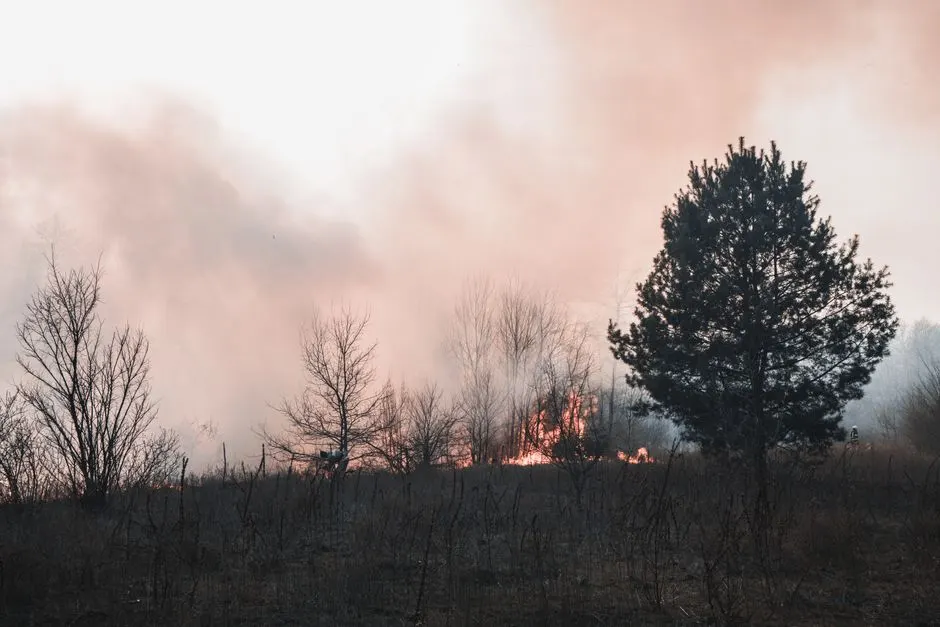
Preparing your Laguna Woods home for fire season means clearing defensible space in three zones, hardening the house against embers, and having an evacuation plan you can execute in under five minutes. Fire season in Laguna Woods runs roughly May through November, but the Santa Ana wind events that drive the worst fires here can arrive as early as late September and as late as January. This guide walks through the exact steps we recommend to homeowners across Laguna Woods, from the 0-5 foot ember-resistant zone to the go-bag you keep by the front door.
When fire season hits Laguna Woods - and why it now runs longer
Fire season in Laguna Woods California peaks from September through November, when Santa Ana winds push hot, dry air from the desert toward the coast and humidity drops below 15%. The rest of the year, the risk shifts but doesn't disappear. A wet winter grows grass and brush; a dry spring cures it into fuel. By June, that fuel is ready.
Laguna Woods sits at roughly 400 feet of elevation, tucked between the coastal fog belt and the inland heat. That geography matters. On a typical fall afternoon, relative humidity here can fall from 70% at dawn to 12% by 3 p.m. Wood shake roofs, wood-fenced patios, and mature eucalyptus and pine trees - common in the older sections of the community - dry out fast in those conditions.
We see the same pattern every year. Homeowners who start clearing in October are already behind. The right window is late spring, when you can still cut back vegetation without stressing it and before the first red flag warning hits.
Defensible space requirements in Laguna Woods CA: the three zones
Defensible space in Laguna Woods is the managed buffer between your home and the vegetation around it, divided into three zones measured from the structure. California's defensible space rules (Public Resources Code 4291 and the newer ember-resistant zone requirements under AB 3074) apply here, and the local fire authority can inspect and cite. But the practical reason to do it is simpler: embers, not flames, destroy most homes in a wildfire. Embers can travel a mile ahead of a fire front and slip through a vent or land on a dry doormat.
Zone 0: 0-5 feet from the structure
This is the ember-resistant zone, and it's the one most homeowners skip. Within five feet of your walls, foundation, and deck, you want zero combustible material. That means no bark mulch, no wood chips, no pine needles, no firewood stacked against the house, no wooden planter boxes, and no shrubs touching the siding.
Replace mulch with gravel, crushed rock, or bare soil. Move firewood at least 30 feet away. If you have a wooden fence attached to the house, replace the last five feet with a metal gate or a non-combustible section.
Zone 1: 5-30 feet
In this band, the goal is to break up the fuel ladder - the continuous path that lets fire climb from grass to shrub to tree to roof. Keep grass mowed to 4 inches or less. Space shrubs at least twice their mature width apart. Remove any tree branches within 10 feet of your chimney and any branches that overhang the roof.
If you have juniper, eucalyptus, or pampas grass in this zone, remove them. They're among the most flammable plants in Southern California and they burn hot and fast.
Zone 2: 30-100 feet
This is the reduced-fuel zone. You don't need bare ground here - you need horizontal and vertical separation. Keep trees pruned so the lowest branches are at least 6 feet off the ground. Space tree canopies at least 10 feet apart. Remove dead vegetation and any fallen branches.
In Laguna Woods Village and the surrounding HOAs, some of this work is handled by the association's landscape crews. Confirm what's covered before you hire anyone. If your unit backs onto a greenbelt or slope, that shared edge is where we see the most preventable damage.
Harden the house itself: vents, eaves, windows, and decks
Defensible space buys you time. Hardening the structure is what determines whether embers that reach your home actually ignite it. The three highest-return upgrades for a Laguna Woods home are vent screening, roof and gutter maintenance, and window protection.
- Vents: Replace standard 1/4-inch mesh with 1/8-inch corrosion-resistant metal mesh on attic, foundation, and dryer vents. Better yet, install ember-resistant vents rated to ASTM E2886.
- Roof and gutters: Clear pine needles and leaves from gutters and the roof valleys twice a year - once in late spring, once in early fall. A single clogged valley can hold enough dry debris to ignite a roof.
- Windows: Dual-pane windows with tempered glass resist radiant heat far better than single-pane. If you're replacing windows anyway, this is the time.
- Decks: Clear anything stored under the deck. If the deck is wood, consider replacing the boards within 5 feet of the house with a Class A fire-rated composite.
- Chimney: Install a spark arrestor and keep the chimney cap in good condition.
If a fire does reach the structure, the damage is rarely just flame. Smoke pushes through every gap, and soot settles on surfaces in rooms the fire never touched. That's why our Smoke Damage Restoration LAGUNA WOODS CA work often starts in bedrooms and closets that look untouched from the doorway.
Your fire season evacuation plan for Laguna Woods
A fire season evacuation plan for Laguna Woods needs to account for the fact that most residents here are 55 and older, many live alone, and the community's main exits funnel onto El Toro Road and Moulton Parkway. When a red flag warning turns into an evacuation order, those roads back up fast.
Build your plan around three things: where you'll go, how you'll get there, and what you'll take.
- Two routes out. Know one route toward the coast (typically via El Toro Road to the 5 or 133) and one inland or north. Drive both on a normal day so you're not reading signs under stress.
- A destination, not a direction. Pick a specific address - a family member's home, a hotel, a shelter - and tell someone where you're going.
- A go-bag by the door. Medications (7 days), copies of ID and insurance, phone chargers, a flashlight, N95 masks, water, and pet supplies if you have a pet.
- A car with at least half a tank. During red flag warnings, don't let it drop below half.
- A check-in person. One out-of-area contact who knows your plan and will confirm you arrived.
If you live in a multi-unit building - which describes a large share of the housing here - your evacuation route may share a single stairwell or corridor. Walk it once with a flashlight and count the doors. In a smoke-filled hallway, that count is what gets you out.
We handle the cleanup side of this in neighborhoods across the area, including Fire Damage Restoration in Laguna Woods Village, where shared walls and common corridors change how smoke and water damage spread between units.
Fire season home preparation checklist for Laguna Woods
Here's the checklist we hand to homeowners. Work it top to bottom in late spring, then spot-check it again in September.
- Clear all combustible material within 5 feet of the house (Zone 0).
- Mow grass to 4 inches or less; remove dead brush.
- Remove branches within 10 feet of the chimney and overhanging the roof.
- Prune tree limbs to 6 feet off the ground; space canopies 10 feet apart.
- Clear gutters and roof valleys of needles and leaves.
- Install 1/8-inch mesh or ember-resistant vents on all exterior vents.
- Move firewood and propane tanks at least 30 feet from the structure.
- Test smoke alarms and replace batteries.
- Check that your go-bag is stocked and your car has fuel.
- Confirm your insurance policy is current and your deductible is what you think it is.
One more item that doesn't get enough attention: document your home. Walk through every room with your phone and record a slow video. Open closets and drawers. That footage is what makes an insurance claim straightforward if you ever need it.
Common mistakes we see in Laguna Woods
The single most common mistake is treating Zone 0 as optional. Homeowners clear the brush 30 feet out, then leave a stack of firewood against the garage wall and a dry doormat on a wood porch. Those are the ignition points.
Other mistakes we see repeatedly:
- Clearing once and forgetting. Vegetation regrows. A defensible space that was clean in May is overgrown by August.
- Ignoring the roof. A Class A roof still catches fire if the gutter below it is packed with dry pine needles.
- Waiting for the evacuation order. By the time the order comes, El Toro Road is already congested. Leave on a warning, not an order.
- Assuming the HOA handles it. In Laguna Woods Village and similar communities, the association maintains common areas - not your patio, your eaves, or your vents.
- Not documenting before the fire. Without photos or video, insurance adjusters have to estimate contents from memory. That rarely works in your favor.
When a fire does touch a home, the damage rarely stops at the burned room. Smoke odor settles into upholstery, cabinetry, and drywall for weeks. Our Odor Removal After Fire LAGUNA WOODS CA work uses hydroxyl and ozone treatment to pull those particles out of porous materials - not just mask them.
When to call a professional
Most of the preparation work above is something you can do yourself or hand to a landscape crew. But there are four situations where you should call us instead of improvising.
First, if a fire has already touched your home - even a small one contained to a single room - the soot residue is acidic and starts corroding metal and etching glass within hours. Second, if you smell smoke days after a nearby fire, that's not residual odor; it's particles lodged in your HVAC system and insulation. Third, if a fire suppression effort left standing water in your walls or under your floors, you have a mold problem forming within 48 hours. Fourth, if your home has structural damage - charred framing, cracked stucco, compromised roof decking - that needs a licensed contractor before anyone moves back in.
Our team at Fire Damage Restoration Laguna Woods handles all four. We assess the damage, document it for your insurance claim, and do the cleanup, structural repair, and odor treatment in one pass. If you're not sure whether you need us, call and describe what you're seeing. We'll tell you honestly.
Frequently Asked Questions
How do I prepare my Laguna Woods home for fire season?
Clear all combustible material within 5 feet of the structure, mow grass to 4 inches, remove branches within 10 feet of the chimney, install 1/8-inch mesh on exterior vents, and build a go-bag with 7 days of medications. Start in late spring, before the first red flag warning.
What is defensible space in Laguna Woods CA?
Defensible space is the managed buffer between your home and surrounding vegetation, divided into three zones: 0-5 feet (ember-resistant, no combustibles), 5-30 feet (reduced fuel, spaced plants), and 30-100 feet (reduced fuel, pruned trees). California law requires it, and local fire authorities can inspect.
When is fire season in Laguna Woods California?
Peak fire season runs September through November, driven by Santa Ana winds and humidity below 15%. Risk extends from roughly May through January depending on rainfall. A wet winter grows fuel; a dry spring cures it. The dangerous window is wider than most homeowners assume.
How can I protect my home from wildfire in Laguna Woods CA?
Focus on embers, not flames. Install ember-resistant vents, clear gutters and roof valleys twice a year, replace the last 5 feet of any wood fence attached to the house with metal, and keep firewood at least 30 feet from the structure. Embers ignite most homes that burn.
How long does fire damage restoration take?
Smoke and soot cleanup in a single room typically takes 3-5 days. Whole-home restoration with structural repair runs 4-12 weeks depending on the extent of damage and permit timelines. Water damage from suppression adds drying time - usually 3-5 days before repairs can begin.
Get help with Fire Damage Restoration in LAGUNA WOODS
If a fire has already touched your home, or you're not sure whether the smoke smell is something that will clear on its own, call us. We handle Fire Damage Restoration across Laguna Woods - assessment, cleanup, structural repair, and odor treatment - and we work directly with your insurance adjuster.
Call (833) 929-6186 and describe what you're seeing. We'll tell you what it takes to make it right.